- SOUTHWEST FLORIDA
Professional AC Repair to Restore Comfort and Reliable Cooling in Cape Coral, FL & Southwest Florida
When your air conditioner stops cooling, blows warm air or struggles to maintain a comfortable temperature, the problem can become noticeable quickly in Southwest Florida. A-Max Appliance Repair provides air conditioning repair services in Cape Coral and surrounding communities, helping homeowners identify cooling problems and restore dependable system performance.
- 4.9 Star Rating On Google
- Licensed and Insured
- Factory-Trained & Certified Technicians
- Locally Owned
15+ Years
Local experience you can count on
400+ Reviews
4.9 stars on Google
Same-Day Service
Evening & weekend slots available
90-Day Warranty
Parts & labor guaranteed
All Major Brands
Samsung, LG, GE, Whirlpool & more
Why Professional Air Conditioning Repair Matters
Your air conditioner does more than lower the temperature inside your home. It also removes moisture from indoor air, helps maintain comfortable humidity levels and supports a healthier indoor environment.
In Southwest Florida, where cooling systems often operate for much of the year, even a relatively minor AC problem can affect comfort and energy consumption.
An air conditioner that runs constantly, cools unevenly or struggles to reach the thermostat setting may have an underlying problem that becomes more expensive if left unresolved.
Professional AC repair helps identify the actual cause of poor performance before unnecessary parts are replaced. Addressing problems early can also reduce strain on other system components and help extend the equipment’s useful life.
Signs Your Air Conditioner Needs Professional Repair
Air conditioning problems don’t always begin with a complete system failure. Many develop gradually, giving homeowners an opportunity to schedule service before cooling performance deteriorates further.
AC Running but Not Cooling the House
If your air conditioner runs continuously but the indoor temperature remains uncomfortable, several issues could be responsible.
Restricted airflow, dirty evaporator coils, refrigerant problems, failing electrical components or compressor issues can prevent the system from removing enough heat.
The key is determining why the air conditioner is operating without producing adequate cooling.
Air Conditioner Blowing Warm Air
Warm air coming from your vents may indicate that the cooling cycle isn’t operating correctly.
Possible causes include thermostat settings, a failed outdoor unit, refrigerant-related problems or an electrical component that prevents the compressor from operating.
A professional diagnosis can identify whether the problem involves the indoor equipment, outdoor condenser or another part of the cooling system.
Weak Airflow Coming From AC Vents
Poor airflow can make certain rooms uncomfortable even when the air conditioner is producing cold air.
Common causes include clogged air filters, blower motor problems, blocked return vents, duct restrictions or ice buildup on the evaporator coil.
Weak airflow can also contribute to additional cooling problems by preventing the system from transferring heat efficiently.
Air Conditioner Keeps Turning On and Off
An air conditioner that starts and stops repeatedly may be experiencing short cycling.
This can result from thermostat problems, airflow restrictions, electrical failures, refrigerant issues or equipment sizing problems.
Frequent cycling can increase component wear and prevent the system from cooling your home consistently.
AC Unit Making Unusual Noises
A properly operating air conditioner produces some normal mechanical sounds. Grinding, squealing, rattling, buzzing or unusually loud humming may indicate a developing problem.
Potential causes include loose components, failing fan motors, electrical issues or compressor problems.
New or persistent noises deserve attention, particularly when accompanied by reduced cooling performance.
Water Leaking Around the Indoor AC Unit
Air conditioners remove moisture from indoor air during normal operation. That moisture should drain safely through the condensate drainage system.
A clogged drain line, damaged drain pan, frozen evaporator coil or drainage problem can cause water to collect around the indoor air handler.
Water near electrical equipment or inside walls and ceilings should be addressed promptly.
Air Conditioner Not Turning On
An AC system that won’t start may have a thermostat issue, tripped breaker, failed capacitor, damaged contactor or another electrical problem.
Some systems also have safety switches that interrupt operation when a condensate drain backs up.
Because several different failures can produce the same symptom, proper testing is important.
Signs Your Air Conditioner Needs Professional Repair
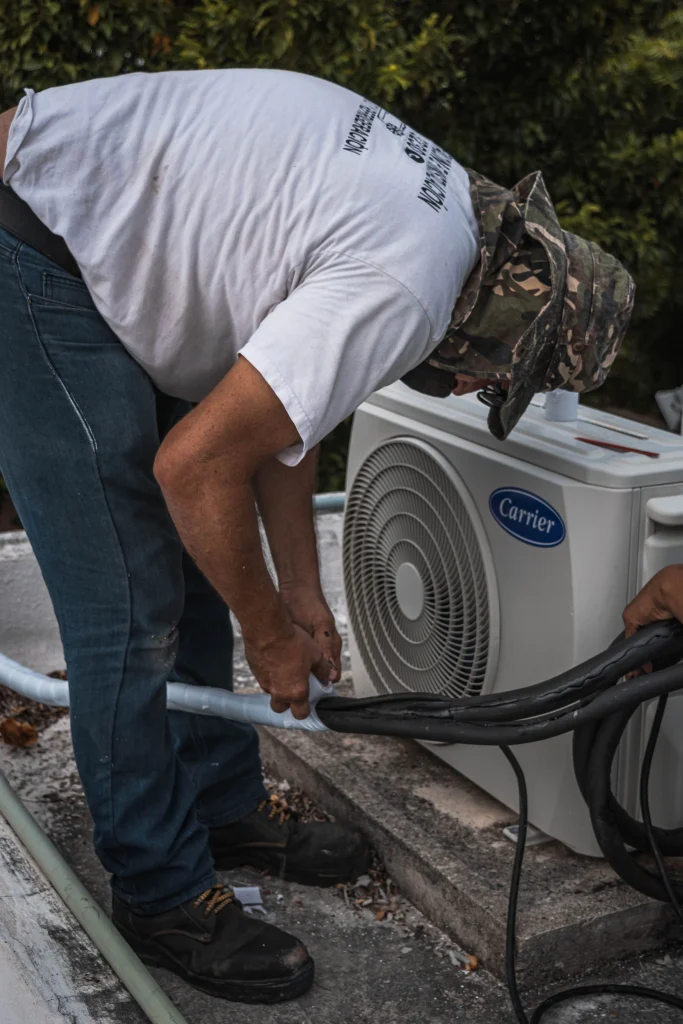
Air conditioning problems don’t always begin with a complete system failure. Many develop gradually, giving homeowners an opportunity to schedule service before cooling performance deteriorates further.
AC Running but Not Cooling the House
If your air conditioner runs continuously but the indoor temperature remains uncomfortable, several issues could be responsible.
Restricted airflow, dirty evaporator coils, refrigerant problems, failing electrical components or compressor issues can prevent the system from removing enough heat.
The key is determining why the air conditioner is operating without producing adequate cooling.
Air Conditioner Blowing Warm Air
Warm air coming from your vents may indicate that the cooling cycle isn’t operating correctly.
Possible causes include thermostat settings, a failed outdoor unit, refrigerant-related problems or an electrical component that prevents the compressor from operating.
A professional diagnosis can identify whether the problem involves the indoor equipment, outdoor condenser or another part of the cooling system.
Weak Airflow Coming From AC Vents
Poor airflow can make certain rooms uncomfortable even when the air conditioner is producing cold air.
Common causes include clogged air filters, blower motor problems, blocked return vents, duct restrictions or ice buildup on the evaporator coil.
Weak airflow can also contribute to additional cooling problems by preventing the system from transferring heat efficiently.
Air Conditioner Keeps Turning On and Off
An air conditioner that starts and stops repeatedly may be experiencing short cycling.
This can result from thermostat problems, airflow restrictions, electrical failures, refrigerant issues or equipment sizing problems.
Frequent cycling can increase component wear and prevent the system from cooling your home consistently.
AC Unit Making Unusual Noises
A properly operating air conditioner produces some normal mechanical sounds. Grinding, squealing, rattling, buzzing or unusually loud humming may indicate a developing problem.
Potential causes include loose components, failing fan motors, electrical issues or compressor problems.
New or persistent noises deserve attention, particularly when accompanied by reduced cooling performance.
Water Leaking Around the Indoor AC Unit
Air conditioners remove moisture from indoor air during normal operation. That moisture should drain safely through the condensate drainage system.
A clogged drain line, damaged drain pan, frozen evaporator coil or drainage problem can cause water to collect around the indoor air handler.
Water near electrical equipment or inside walls and ceilings should be addressed promptly.
Air Conditioner Not Turning On
An AC system that won’t start may have a thermostat issue, tripped breaker, failed capacitor, damaged contactor or another electrical problem.
Some systems also have safety switches that interrupt operation when a condensate drain backs up.
Because several different failures can produce the same symptom, proper testing is important.
What Causes Air Conditioning Systems to Stop Cooling Properly?
Dirty Air Filters and Restricted Airflow
Air conditioners need consistent airflow across the evaporator coil.
A heavily clogged filter can reduce airflow, lower cooling efficiency and contribute to coil freezing.
Replacing a dirty filter may help, but persistent airflow problems can indicate a blower or ductwork issue.
Refrigerant Leaks
Refrigerant carries heat from inside your home to the outdoor unit.
When a system loses refrigerant through a leak, cooling performance can decline. Ice may develop on refrigerant lines or the evaporator coil.
Refrigerant does not normally get consumed during operation. A system that is low on refrigerant should be evaluated for leakage rather than repeatedly topped off without identifying the cause.
Faulty Capacitors or Electrical Components
Capacitors help certain motors and compressors start and operate.
A failed capacitor, contactor or electrical connection can prevent the outdoor unit from starting or cause intermittent operation.
These components involve potentially dangerous electrical energy and should be tested by a qualified technician.
Dirty Condenser Coils
The outdoor condenser releases heat removed from your home.
When dirt, debris or other obstructions interfere with heat transfer, the air conditioner may struggle to cool efficiently.
Outdoor equipment in Southwest Florida is exposed to rain, vegetation, airborne debris and, in coastal locations, salt-laden air.
Frozen Evaporator Coils
Ice forming on the indoor evaporator coil can restrict airflow and significantly reduce cooling performance.
Possible causes include dirty filters, blower problems, restricted airflow or refrigerant-related issues.
Continuing to operate a system with a frozen coil can make the problem worse.
Thermostat or Control Problems
Sometimes the cooling equipment is functional, but the controls aren’t communicating correctly.
Faulty temperature sensors, thermostat wiring or control components may cause irregular operation, incorrect temperature readings or failure to start.
Why Southwest Florida Air Conditioners Experience Heavy Wear
Air conditioning systems in Cape Coral, Fort Myers and surrounding Southwest Florida communities face demanding operating conditions.
Long Cooling Seasons
Unlike homes in northern climates, Florida residences often depend on air conditioning for most of the year.
Extended operation increases the importance of properly functioning motors, fans, electrical components and heat-transfer surfaces.
High Humidity
Humidity is a major consideration for Florida homeowners.
An air conditioner that cools poorly or cycles incorrectly may also struggle to remove moisture effectively. Rooms can feel damp or uncomfortable even when the thermostat shows a relatively reasonable temperature.
Coastal Environmental Exposure
Homes near coastal waterways may experience increased corrosion of exposed outdoor components.
Salt exposure can contribute to deterioration of metal surfaces, electrical connections and condenser equipment over time.
Seasonal Homes and Vacation Properties
Air conditioners in seasonal residences may operate with limited supervision for extended periods.
A blocked condensate drain, thermostat problem or cooling failure can go unnoticed until the homeowner or guests arrive.
These properties benefit from dependable cooling performance and prompt attention when operating conditions change.
Should You Repair or Replace Your Air Conditioner?
An air conditioner that isn’t cooling properly doesn’t automatically need replacement.
Many problems involving capacitors, contactors, fan motors, thermostats, condensate drainage and other serviceable components can be repaired.
Replacement may deserve consideration when an older system experiences repeated failures or requires a major repair.
Several factors should guide the decision:
System age: Older equipment may have less remaining useful life.
Repair cost: Compare the proposed repair with the cost of suitable replacement equipment.
Overall condition: A well-maintained system may be worth repairing even after years of service.
Frequency of breakdowns: Repeated failures can change the economics of continued repairs.
Cooling performance: Consider whether the system was maintaining comfortable temperatures before the current problem.
Energy consumption: Newer equipment may provide meaningful efficiency improvements, depending on the existing system.
A proper diagnosis gives you the information needed to evaluate the repair before making a larger investment.
Air Conditioning Equipment and Components We Diagnose
Residential air conditioning problems may involve several interconnected components, including:
Indoor air handlers
Outdoor condenser units
Evaporator and condenser coils
Blower motors and condenser fans
Thermostats and temperature controls
Capacitors and contactors
Condensate drain lines and safety switches
Refrigerant lines and cooling components
Compressor starting and operating systems
Electrical connections and control circuits
The goal is to identify the component or operating condition responsible for the problem, not simply replace parts based on a symptom.
Our Air Conditioning Repair Process
1. Schedule Your Service Appointment
Contact A-Max Appliance Repair and describe what your air conditioner is doing.
Let us know whether the system is blowing warm air, running constantly, making unusual noises or failing to turn on.
2. Diagnose the Cooling Problem
A technician evaluates the reported symptoms and tests the relevant equipment to identify the source of the failure.
Depending on the problem, this may involve checking airflow, electrical operation, system controls, drainage or cooling performance.
3. Review the Findings
Once the problem has been identified, you’ll receive an explanation of what failed and the recommended next steps.
The goal is to help you understand the repair before authorizing the work.
4. Complete the Approved Repair
The necessary repairs are performed according to the equipment’s requirements and applicable safety procedures.
5. Verify System Operation
After the repair, the system should be tested to confirm that the affected components are functioning correctly and cooling performance has been restored.
Why Homeowners Choose A-Max Appliance Repair
Homeowners need more than a quick explanation that their air conditioner isn’t working. They need to understand what’s causing the problem and what it will take to correct it.
A-Max Appliance Repair focuses on diagnosing equipment problems, explaining repair options and helping customers make informed decisions.
Our approach emphasizes clear communication, practical recommendations and attention to the actual cause of equipment failure.
Whether your air conditioner has stopped working or has gradually lost cooling performance, the first step is identifying the problem accurately.
Air Conditioning Repair in Cape Coral and Surrounding Southwest Florida Communities
A-Max Appliance Repair serves customers in Cape Coral and the surrounding Southwest Florida region.
Our broader service area includes Fort Myers, North Fort Myers, Lehigh Acres, Estero, Bonita Springs, Naples, Punta Gorda and Port Charlotte.
Contact our office to confirm air conditioning service availability at your location.
Frequently Asked Questions About Air Conditioning Repair
Why is my air conditioner running but not cooling my house?
An AC system may run without cooling properly because of restricted airflow, dirty coils, refrigerant problems, faulty electrical components or compressor issues. A technician can test the system to determine which condition is preventing adequate cooling.
Why is my AC blowing warm air instead of cold air?
Warm air may indicate that the outdoor condenser isn’t operating, the thermostat is set incorrectly or the cooling system has developed a mechanical or refrigerant-related problem. If the thermostat is correctly set to cooling and the problem continues, professional diagnosis is recommended.
Why does my air conditioner keep running without reaching the thermostat temperature?
Extended operation can occur during extreme outdoor temperatures, but continuous running combined with poor cooling may indicate restricted airflow, dirty coils, refrigerant problems or equipment that isn’t performing at its intended capacity.
Can a clogged AC drain line stop my air conditioner from working?
Yes. Many air conditioning systems use a condensate safety switch that interrupts cooling when water backs up in the drainage system. Clearing the blockage and correcting the underlying drainage issue may be necessary before normal operation resumes.
Why is there ice on my air conditioner?
Ice on the evaporator coil or refrigerant line can develop when airflow is restricted or the refrigerant system isn’t operating correctly. Turn off cooling and arrange an inspection rather than allowing the system to continue operating while frozen.
Is it worth repairing an older air conditioner?
That depends on the age of the equipment, the repair cost, its overall condition and whether it has experienced repeated failures. Minor repairs may still make financial sense, while major failures on aging equipment can justify considering replacement.
How often should an air conditioner be serviced in Southwest Florida?
Because Florida cooling systems operate heavily throughout the year, regular professional maintenance is worthwhile. Many homeowners schedule maintenance at least annually, with more frequent checks appropriate for certain systems or operating conditions.
What should I check before calling for AC repair?
Confirm that the thermostat is set to cooling, inspect the air filter and check whether supply and return vents are obstructed. You can also check for an obvious tripped breaker once, but do not repeatedly reset a breaker that continues to trip. Avoid opening electrical panels or attempting refrigerant repairs.
Schedule Air Conditioning Repair in Cape Coral, FL
If your air conditioner isn’t cooling, runs constantly, blows warm air or has developed another performance problem, A-Max Appliance Repair can help you take the next step toward identifying the cause.
Contact us to discuss your air conditioning problem and confirm service availability in your Southwest Florida community.
Call A-Max Appliance Repair: (239) 777-5292
Serving Cape Coral and surrounding Southwest Florida communities.